
Headings are one of the most consistently underestimated elements in SEO writing. They don’t feel like the “real” content — the real content is the paragraphs underneath, the actual information being delivered. But headings do a surprising amount of quiet, structural work that both readers and search engines depend on heavily, and getting them wrong doesn’t just make a page look slightly disorganized. It can genuinely undermine how well that content performs in search, how easily readers can navigate it, and increasingly, how well AI-driven answer engines can extract and cite it accurately.
This article walks through the actual principles behind writing effective, SEO-conscious headings — not as a mechanical checklist, but as a set of interconnected ideas about how headings function for readers, search engines, and the newer generation of AI systems that increasingly rely on clear structure to do their own work well.
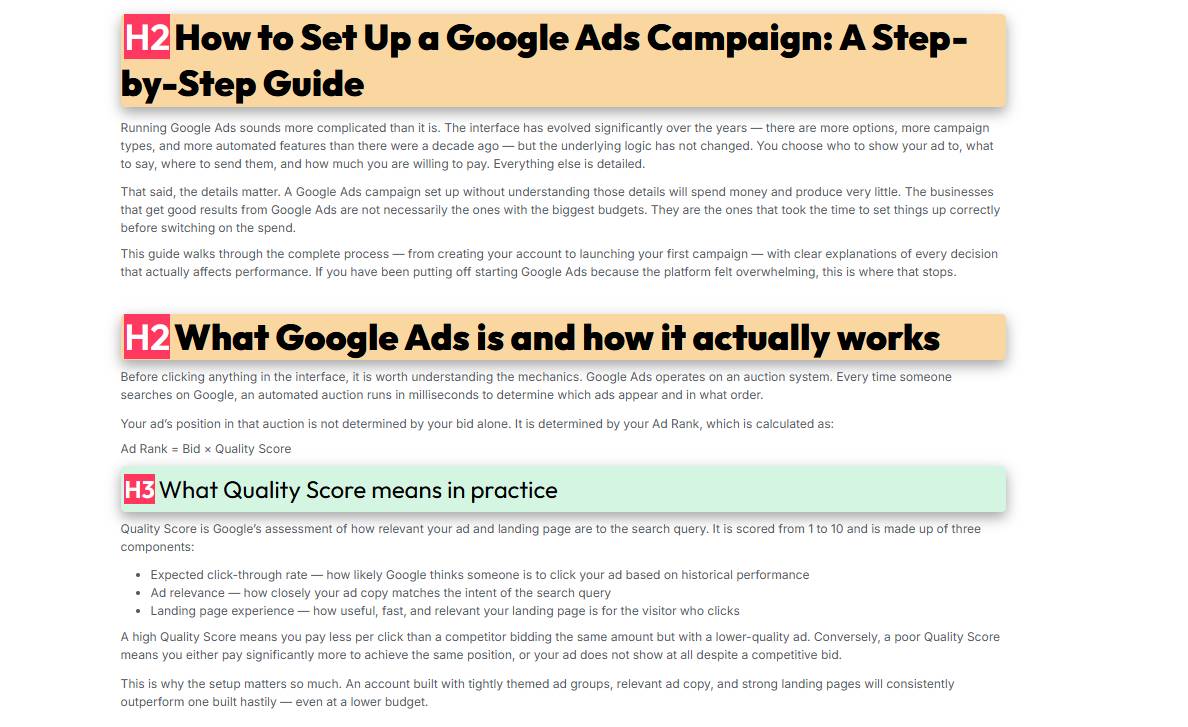 A heading tag (H1, H2, H3, and so on) isn’t just a stylistic choice that happens to make text larger and bolder — it’s a semantic signal in a page’s underlying code, explicitly telling both browsers and search engines “this is where a new section begins, and this is roughly how important it is relative to the rest of the page.” Search engines use this structure to understand a page’s topic and organization; readers use it to scan and navigate; and increasingly, generative AI systems use it to extract clearly organized information when synthesizing an answer.
Why Headings Matter More Than They Seem To
Headings Are a Structural Signal, Not Just a Visual One
A heading tag (H1, H2, H3, and so on) isn’t just a stylistic choice that happens to make text larger and bolder — it’s a semantic signal in a page’s underlying code, explicitly telling both browsers and search engines “this is where a new section begins, and this is roughly how important it is relative to the rest of the page.” Search engines use this structure to understand a page’s topic and organization; readers use it to scan and navigate; and increasingly, generative AI systems use it to extract clearly organized information when synthesizing an answer.
Most Readers Scan Before They Read
Research on reading behavior consistently shows that most people scan a page before committing to read it in full — checking headings first to judge whether the content actually addresses what they’re looking for. A page with clear, descriptive, well-organized headings gives scanning readers exactly the information they need to decide to keep reading. A page with vague or missing headings forces readers to dig through paragraphs just to figure out whether the content is even relevant to them, and many will simply leave rather than do that work.Headings Increasingly Determine AI Visibility Too
As more search behavior shifts toward AI-generated answers pulling directly from web content, clear heading structure has become even more consequential — a generative system trying to extract a direct answer to a specific question can much more reliably identify and pull the relevant section of a page when that section is clearly labeled with a specific, well-matched heading, rather than buried within a long, undifferentiated block of prose.The Core Principle: Headings Should Reflect Genuine Structure, Not Decorate the Page
Structure First, Then Headings
A common mistake in SEO-focused writing is treating headings as something to sprinkle keywords into after the content is already written, rather than using headings to reflect genuine, logical structure that was planned before writing began. Well-structured content organizes ideas into clear sections first — introduction, distinct subtopics, conclusion — and headings simply label that structure accurately, rather than being retrofitted onto content that wasn’t actually organized around them in the first place.Every Heading Should Represent a Genuinely Distinct Idea
A heading exists to mark a meaningful shift in topic or subtopic. If two consecutive headings are covering essentially the same idea with slightly different phrasing, that’s usually a sign the content underneath either needs to be consolidated under one heading, or the two sections genuinely need to be more clearly differentiated in what they actually cover.Heading Hierarchy: Understanding H1 Through H6
What Each Level Represents
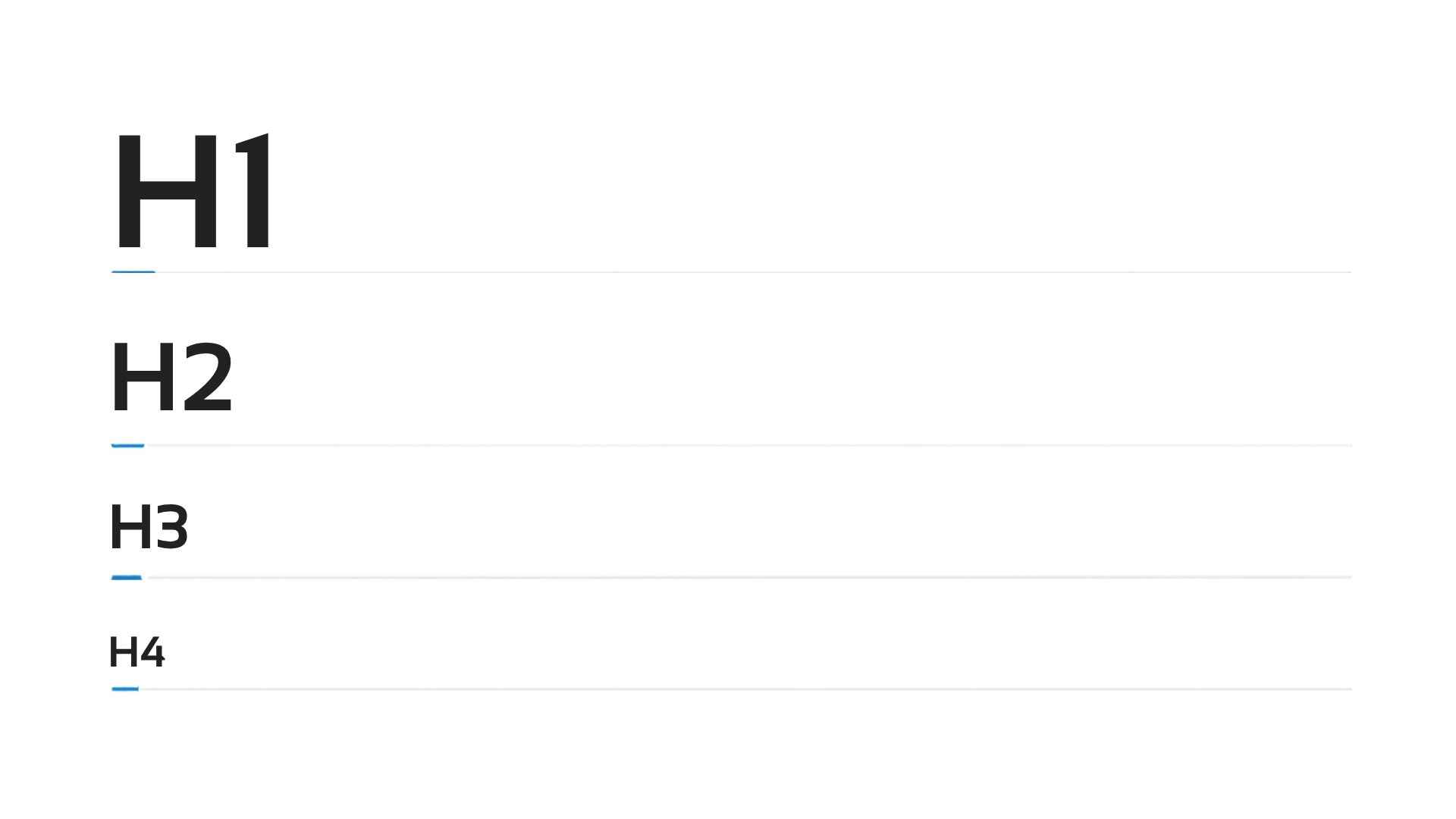
- H1 — the single main heading of a page, representing the page’s overall topic. A page should generally have exactly one H1, functioning similarly to a book’s title.
- H2 — major section headings, dividing a page’s content into its primary subtopics.
- H3 — subsections within an H2 section, breaking a major topic down into more specific, related points.
- H4 through H6 — further nested levels of subdivision, used less frequently, generally reserved for content with genuinely deep, layered structure.
Why Hierarchy Should Never Skip Levels
Heading levels should generally be used in order, without skipping — an H2 followed directly by an H4, with no H3 in between, breaks the logical nesting structure that both search engines and assistive technology (like screen readers used by visually impaired visitors) depend on to accurately understand a page’s organization. Skipping levels might not always be visually obvious to a sighted reader glancing at a page, but it creates a structurally broken hierarchy underneath. A long buying guide comparing product categories, for instance, might use H2s for each major product category being compared, H3s underneath each for specific attributes like price range, features, and pros and cons within that category, and only reach for H4 in the rare case where one of those attributes itself needs further breakdown — maintaining a clear, logical nesting structure a reader (or a search engine, or an AI system) can follow without confusion.Writing Headings That Actually Match Search Intent
Headings Should Reflect Real Questions and Terms People Use
Effective SEO headings are grounded in genuine keyword and search intent research, phrased the way real searchers actually think about and phrase their questions — not necessarily the way a business internally describes its own offerings. A heading like “Our Comprehensive Solution Methodology” reflects internal company language far more than it reflects how an actual searcher would phrase a related question, and it does very little to signal relevance for any specific search term.Matching Specificity to Search Behavior
- Broad, general headings work reasonably well for genuinely broad topics, but specific questions deserve specific headings that mirror how people actually search — “How much does a kitchen remodel cost in [city]” performs better as an actual heading than a vague “Cost Considerations” if that’s genuinely the kind of specific question the content is meant to answer.
- Headings phrased as direct questions often perform particularly well for capturing featured snippets and AI-generated answers, since these formats frequently favor content that directly and immediately answers a clearly stated question.
- Long-tail, more specific headings, even if less frequently searched individually, often collectively capture meaningful additional traffic and citation opportunities across a wide range of related, more specific queries.
Keyword Usage in Headings: Natural, Not Forced
Avoiding the Trap of Keyword Stuffing
Headings should incorporate relevant target keywords where it genuinely makes sense, but forcing an exact keyword phrase awkwardly into every single heading — regardless of whether it reads naturally — tends to produce stiff, robotic-sounding content that reads poorly for actual humans, without providing the ranking benefit older, more mechanical SEO practices once assumed keyword repetition alone would deliver.A Better Standard: Clarity First, Keywords Where Natural
A more effective approach treats keyword inclusion as a secondary check applied to an already clear, well-written heading, rather than the primary driver of how a heading gets phrased. If a naturally written, clear heading also happens to include a relevant target term, that’s a genuine win; if including that exact term would make the heading awkward or unclear, a close, natural variation almost always serves both readers and modern search engines better than a forced, unnatural exact match.Headings and Featured Snippets
Why Headings Are Central to Snippet Eligibility
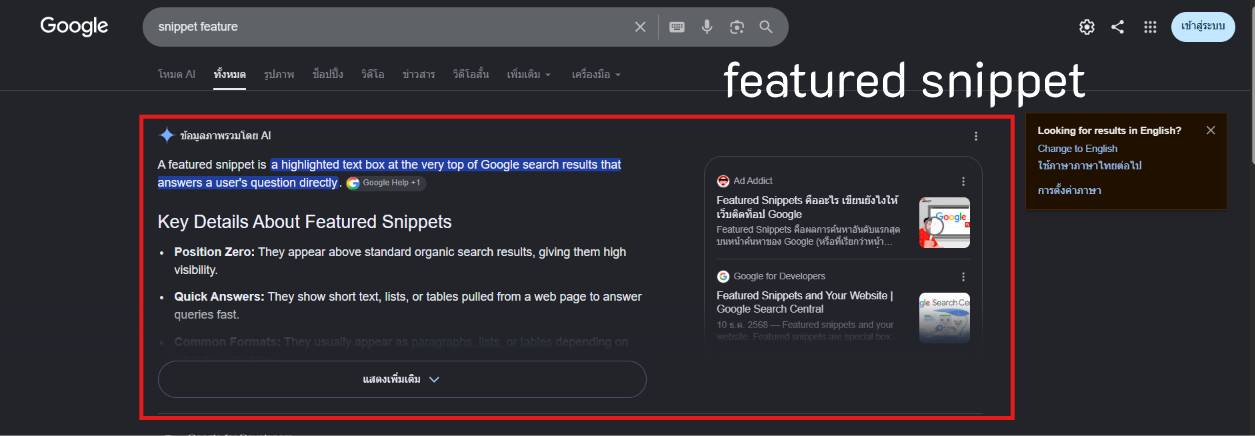
Featured snippets — the highlighted, extracted answer boxes that sometimes appear at the very top of search results — are frequently pulled directly from content organized under a clearly matching heading, since this structure gives search engines a clean, clearly bounded piece of content to extract and display.Structuring Content With Snippet Potential in Mind
- Phrasing a heading as the exact or very close match to a common search question increases the likelihood that the content beneath it gets selected as a snippet answer for that specific query.
- Following a question-style heading with a concise, direct answer in the first sentence or two beneath it — before adding further elaboration — tends to perform particularly well for snippet extraction, since search engines often favor content that answers clearly and immediately rather than building up to an answer gradually.
- Using properly formatted lists or tables under a relevant heading, when the underlying content is naturally list-like or comparative, increases eligibility for list-format or table-format snippets specifically.
Headings for Readability and User Experience
Breaking Up Long-Form Content
Beyond their SEO function, headings serve a genuinely important readability purpose — breaking long-form content into digestible sections prevents the visually and cognitively overwhelming experience of a single, unbroken wall of text, which tends to increase both time on page and the likelihood a reader actually makes it through the full piece rather than abandoning partway through.Guidelines for Readable Heading Frequency
- For long-form content, introducing a new heading roughly every 300 to 500 words of content is a reasonable general guideline, though this should flex based on how naturally the content’s actual structure divides.
- Headings that are too frequent, breaking up content into overly small, choppy sections, can feel just as disorienting as content with too few headings, since it fragments ideas that might have flowed more naturally together under one clear section.
- Consistency in heading style and depth throughout a piece — not mixing wildly different phrasing conventions (some as full questions, others as single words) within the same content — creates a more coherent, professional reading experience.
Headings and Accessibility
Why This Matters Beyond SEO Alone
Proper heading structure is also a core accessibility requirement, since screen readers used by visually impaired visitors rely heavily on heading tags to navigate a page efficiently — allowing a user to jump directly between sections using heading structure, rather than having to listen through an entire page linearly to find a relevant section. A page with headings used purely for visual styling, without proper semantic heading tags in the underlying code, creates real barriers for these visitors, independent of any SEO consequences.Writing Headings for a Specific Page Type
Different Content Types Call for Different Heading Approaches
- Blog posts and guides generally benefit from clear, descriptive, often question-based headings that map closely to genuine search intent and the specific subtopics being covered.
- Product and service pages typically use headings to organize distinct product attributes, benefits, or service components, often more benefit-focused than purely keyword-focused in phrasing.
- FAQ pages are almost entirely built around heading structure itself, with each question functioning as its own heading — making these pages particularly well suited for both featured snippets and AI-citation opportunities, given how directly their structure already mirrors real search queries.
- Comparison and listicle content benefits from consistent, parallel heading structure across compared items (using the same categories of information under each heading), since this consistency helps both readers and search engines clearly understand and extract the comparison being made.