
Ask an SEO specialist what determines whether a website ranks well, and the honest answer is rarely a single factor — it’s the combined result of dozens of signals, working together across two fundamentally different categories. Businesses that only optimize one of those categories, however thoroughly, tend to hit a ceiling they can’t explain, because the piece they’re missing isn’t visible from inside their own website at all. Understanding the difference between on-page and off-page SEO — and why search engines weigh both — is one of the more foundational pieces of knowledge in digital marketing, and one that’s still frequently misunderstood or treated as optional.
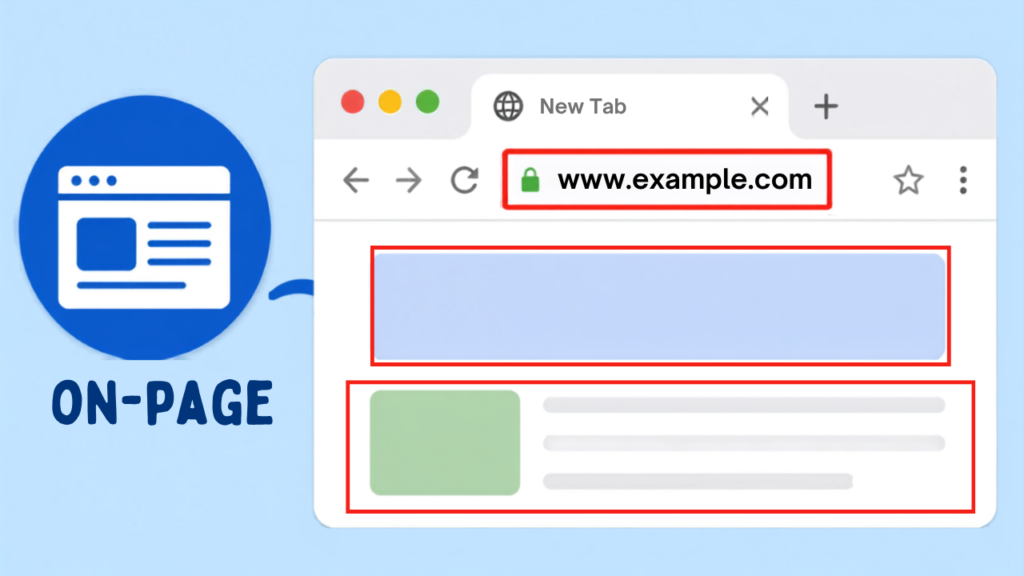 On-page SEO refers to everything a business can directly control on its own website to help search engines understand and favorably rank its content — content quality, keyword usage, page structure, internal linking, technical performance, and metadata. Every element of on-page SEO lives within the site itself, meaning a business has complete, direct control over it.
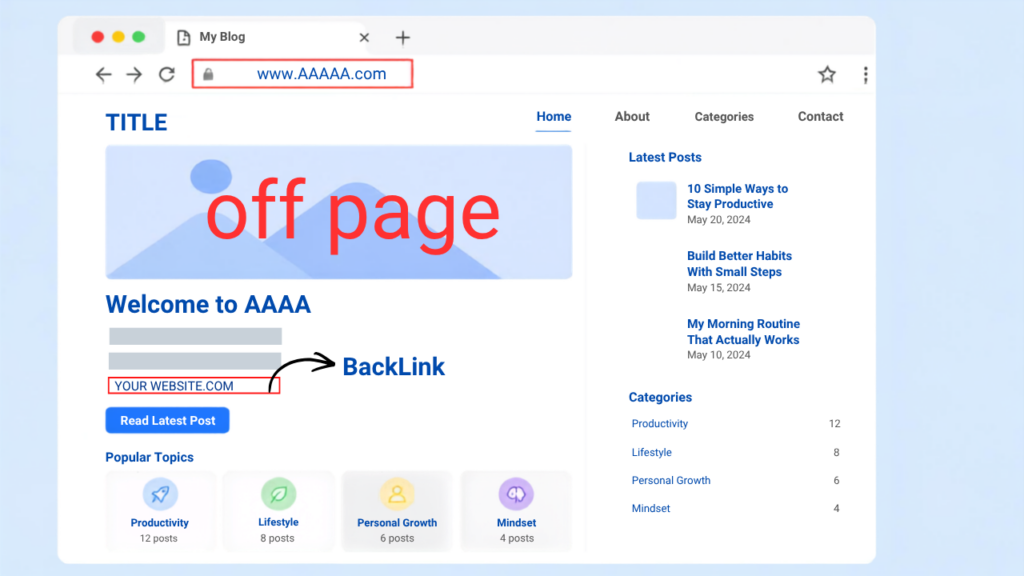 Off-page SEO refers to signals that originate outside the website itself — most notably backlinks from other websites, but also brand mentions, social signals, reviews, and other forms of external validation that indicate to search engines that a site is trustworthy, authoritative, and worth ranking well. Off-page SEO is inherently less directly controllable, since it depends on other websites, publications, and people choosing to reference, link to, or talk about a business — though it can still be deliberately earned and influenced through the right strategy.
Put simply: on-page SEO is what you say about yourself. Off-page SEO is what everyone else says about you. Search engines weigh both, because relying entirely on a business’s own claims about its own quality and authority would be easy to game — external validation, particularly from other credible sources, is much harder to fake convincingly.
The Core Distinction
On-Page SEO Happens on Your Own Website
 On-page SEO refers to everything a business can directly control on its own website to help search engines understand and favorably rank its content — content quality, keyword usage, page structure, internal linking, technical performance, and metadata. Every element of on-page SEO lives within the site itself, meaning a business has complete, direct control over it.
Off-Page SEO Happens Everywhere Else
Off-page SEO refers to signals that originate outside the website itself — most notably backlinks from other websites, but also brand mentions, social signals, reviews, and other forms of external validation that indicate to search engines that a site is trustworthy, authoritative, and worth ranking well. Off-page SEO is inherently less directly controllable, since it depends on other websites, publications, and people choosing to reference, link to, or talk about a business — though it can still be deliberately earned and influenced through the right strategy.
Put simply: on-page SEO is what you say about yourself. Off-page SEO is what everyone else says about you. Search engines weigh both, because relying entirely on a business’s own claims about its own quality and authority would be easy to game — external validation, particularly from other credible sources, is much harder to fake convincingly.
Why Search Engines Care About Both
The Logic Behind This Split
Search engines are, at their core, trying to solve a trust problem: out of millions of pages that might technically match a given search query, which ones genuinely deserve to rank highest, in terms of both relevance and credibility? On-page signals help answer the relevance question — does this specific page actually address what the searcher is looking for, and is it well-structured enough to be understood clearly? Off-page signals help answer the credibility question — do other sources across the internet treat this website as trustworthy and authoritative enough to reference, link to, and recommend? A page can be flawlessly optimized on-page — perfect keyword usage, ideal structure, fast load times — and still fail to rank well if the website behind it has little to no external credibility signaling that it deserves to be trusted on that topic. Conversely, a site with strong backlinks and brand recognition but poorly structured, thin, or irrelevant content on a specific page will also struggle, since the content itself doesn’t actually satisfy what the search engine is trying to match a searcher with. Ranking well requires both signals working together, not one compensating entirely for the absence of the other.What On-Page SEO Actually Involves
Content Quality and Relevance
The foundation of on-page SEO is genuinely useful, relevant content that directly addresses what a searcher is looking for — comprehensive enough to be genuinely helpful, but focused enough to stay clearly on topic, avoiding padding that dilutes relevance without adding real value.Keyword Usage and Search Intent Alignment
This involves researching what terms an audience actually searches for, then incorporating those terms naturally into page titles, headings, and body content — while prioritizing matching the underlying intent behind a search query over simply repeating exact keyword phrases, since modern search engines are far more sophisticated at understanding intent and context than they were in earlier, more mechanical eras of SEO.Technical On-Page Elements
- Title tags and meta descriptions — the clickable headline and summary shown in search results, which affect both ranking relevance and how compelling a listing looks to searchers deciding whether to click.
- Header tag structure (H1, H2, H3) — a clear, logical heading hierarchy that helps both search engines and human readers understand how a page’s content is organized.
- URL structure — clean, descriptive URLs that reflect a page’s actual content and fit logically within the site’s broader structure.
- Image optimization — appropriately compressed images with descriptive alt text, supporting both page speed and accessibility while giving search engines additional context about image content.
- Internal linking — linking between related pages within the same site, helping both visitors and search engines discover related content and understand how different pages relate to each other.
- Page speed and Core Web Vitals — technical performance metrics measuring load time, interactivity, and visual stability, all of which factor directly into ranking and significantly affect user experience.
- Mobile responsiveness — ensuring a page functions and displays properly across device types, particularly important given how much search traffic now originates from mobile devices.
- Structured data (schema markup) — code that explicitly labels what type of content a page contains, helping search engines (and increasingly AI-driven answer engines) accurately interpret and sometimes directly display that content in enhanced search results.
Why On-Page SEO Is the Natural Starting Point
Because on-page SEO is entirely within a business’s own control, it’s generally the more logical place to start any SEO effort — there’s no dependency on external factors, no waiting for other websites to take action, and issues can typically be identified and fixed directly. A business auditing a service page that isn’t ranking well, for instance, might discover the page never clearly addressed the specific search intent behind the target keyword, buried its core information beneath unrelated content, or loaded too slowly on mobile — all fixable through direct changes to the page itself, without needing external cooperation from anyone else.What Off-Page SEO Actually Involves
Backlinks: The Core Off-Page Signal
A backlink — another website linking to yours — remains one of the most influential off-page ranking signals, functioning essentially as a vote of confidence from one site to another. Not all backlinks carry equal weight, though; a link from a well-established, topically relevant, high-authority website generally carries significantly more value than a link from a low-quality, unrelated, or spammy site, and search engines are specifically designed to weigh link quality rather than simply counting raw link volume.Brand Mentions and Unlinked References
Increasingly, search engines also factor in mentions of a business or brand across the web, even when those mentions don’t include a direct clickable link — treating widespread, credible mentions as a supporting signal of established authority and trustworthiness in a given space.Social Signals
While social media engagement (shares, likes, comments) isn’t considered a direct ranking factor in the same way backlinks are, strong social presence often indirectly supports SEO by increasing content visibility, which in turn increases the likelihood of that content being discovered, referenced, and linked to by others — an indirect but genuinely meaningful contribution to off-page authority over time.Reviews and Reputation Signals
For businesses with a local or service-based component, reviews on platforms like Google Business Profile, Yelp, or industry-specific review sites function as a significant off-page trust signal, particularly relevant to local search rankings specifically.Guest Content, PR, and Digital Publicity
Earning coverage, guest articles, or mentions on relevant, reputable external publications is one of the more deliberate, strategic ways businesses actively build off-page authority — effectively earning credibility from established third-party sources rather than waiting passively for it to happen organically.Why Off-Page SEO Is Harder to Control, But Not Impossible to Influence
Because off-page SEO depends on other parties choosing to link to, mention, or reference a business, it can’t be executed through direct internal changes the way on-page SEO can. It requires genuine outreach, relationship building, creating content and resources other sites would actually want to reference, and consistently earning the kind of reputation that naturally attracts external validation over time. A well-researched industry report or an original piece of data-driven content, for instance, tends to attract organic backlinks from other publications referencing it as a source — precisely the kind of off-page authority that’s difficult to fabricate but genuinely achievable through deliberate, high-quality effort.Comparing the Two Directly
The main difference between on-page and off-page SEO lies in where the work happens, how much control you have, and what signals it sends to search engines. Here’s a quick comparison:| Aspect | On-Page SEO | Off-Page SEO |
| Control | Fully within the business’s direct control | Depends significantly on external parties and behavior |
| Timeline | Changes can often show measurable impact relatively quickly after implementation | Authority typically builds more gradually over time |
| Search Engine Signals | Signals relevance, content quality, and usefulness | Signals trust, authority, and external validation |
| Where the Effort Happens | Within the website itself | Across the wider web through outreach, PR, content distribution, and relationship building |
| Risk of Manipulation | Generally harder to manipulate in ways that deceive search engines | More vulnerable to manipulative tactics such as artificial or purchased links |
How Much Does Each Actually Matter?
Neither Works Well in Isolation
It’s a common misconception that one category matters significantly more than the other in some fixed, universal proportion. In practice, the relative importance shifts depending on context — a newer website with limited external authority often sees more immediate impact from thorough on-page optimization simply because there’s more low-hanging opportunity there, while an established site with strong on-page fundamentals already in place often sees its next meaningful ranking gains come specifically from off-page authority building, since its on-page foundation is already solid.A Practical Illustration
Consider two competing local businesses targeting the same competitive keyword. One has excellent on-page optimization — fast, well-structured, genuinely useful content — but very few external backlinks or mentions. The other has a strong backlink profile built over years in business, but its actual on-page content is thin, outdated, and poorly structured. In a genuinely competitive search result, neither business is likely to outrank a well-established competitor that has invested seriously in both dimensions simultaneously — strong on-page content that actually satisfies search intent, combined with a solid off-page reputation that signals real trustworthiness and authority. This is precisely why serious SEO strategy treats the two as complementary requirements rather than substitutes for one another.How Businesses Should Prioritize Between the Two
A Reasonable Sequencing Approach
For most businesses, particularly newer ones or those just beginning a serious SEO effort, a reasonable approach is:- Establish strong on-page fundamentals first, since these are fully controllable and typically show measurable results faster.
- Ensure technical SEO health (site speed, mobile responsiveness, crawlability) is solid, since off-page authority provides little benefit if search engines struggle to properly crawl and index the site in the first place.
- Begin off-page efforts in parallel rather than sequentially once on-page basics are reasonably solid, since backlink and authority building tends to take considerably longer to show results and benefits from an early, sustained start.
- Continue refining both simultaneously over time, since neither is ever truly “finished” — content needs ongoing updates, and authority building is an ongoing, ongoing rather than one-time effort.